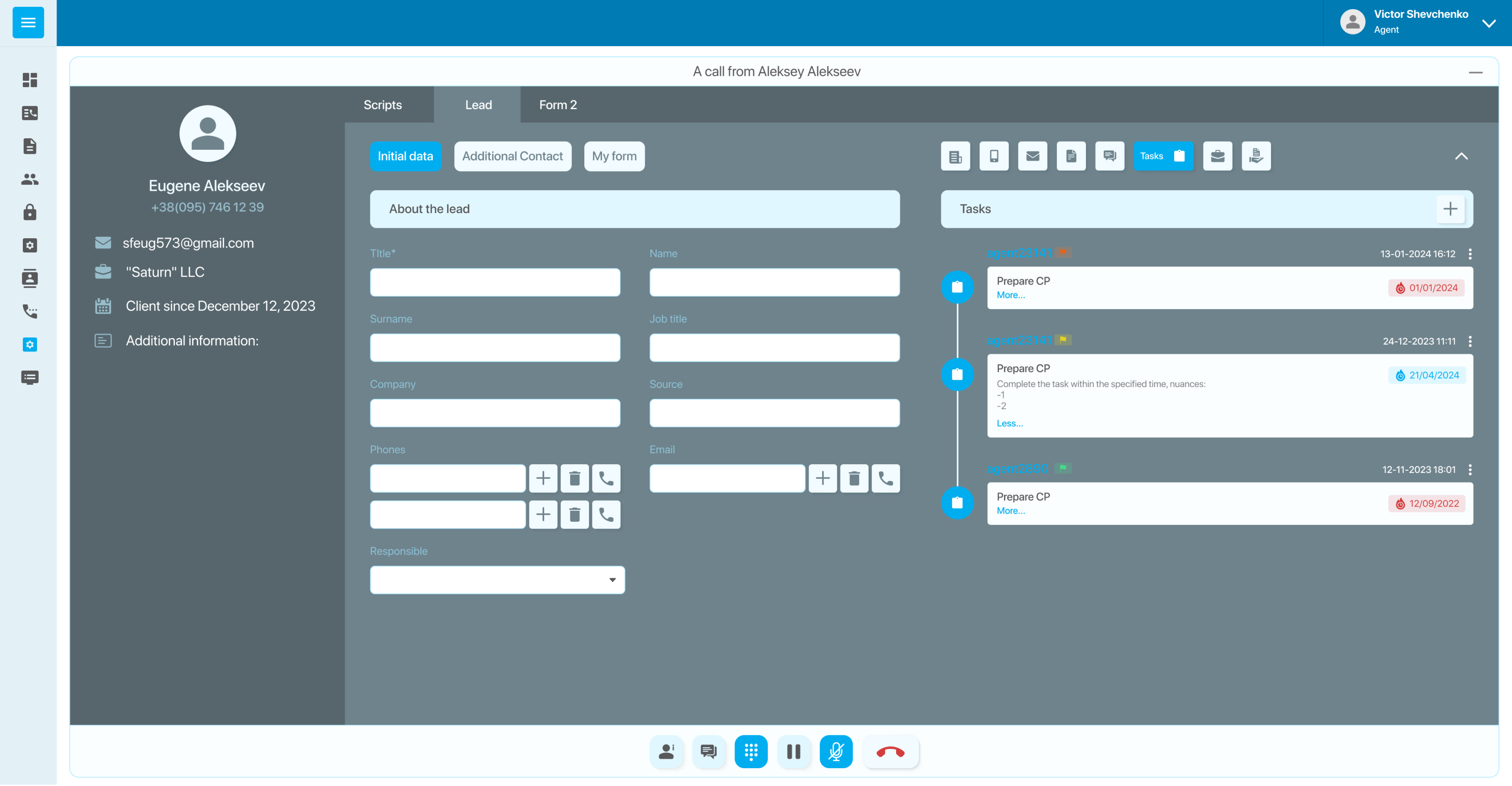







Component-Based Markup of 60–80 SaaS Screens for Telephony Platform
HTML and CSS layout of 60–80 application screens for IPTel’s cloud PBX, auto-dialer, contact centre and CRM, delivered as reusable components to the client’s Angular team.
| Industry: | |
| Location: | Ukraine |
| Services: |
About Project
SaaS & Telecom — cloud business communications platform: IP PBX, call and contact centre, auto-dialer, voice bot, speech analytics, CRM and call tracking (Ukraine)
IPTel is a Ukrainian cloud communications platform used by businesses to run phone systems, call and contact centres, dialing campaigns, AI voice bots, speech analytics and CRM. The web application is extensive: different subscription plans unlock different interfaces and functions, which results in a large number of screens and states. IPTel’s own front-end team integrated the interface into an application and needed a reliable layout team to turn every design into production-ready markup.
Challenges
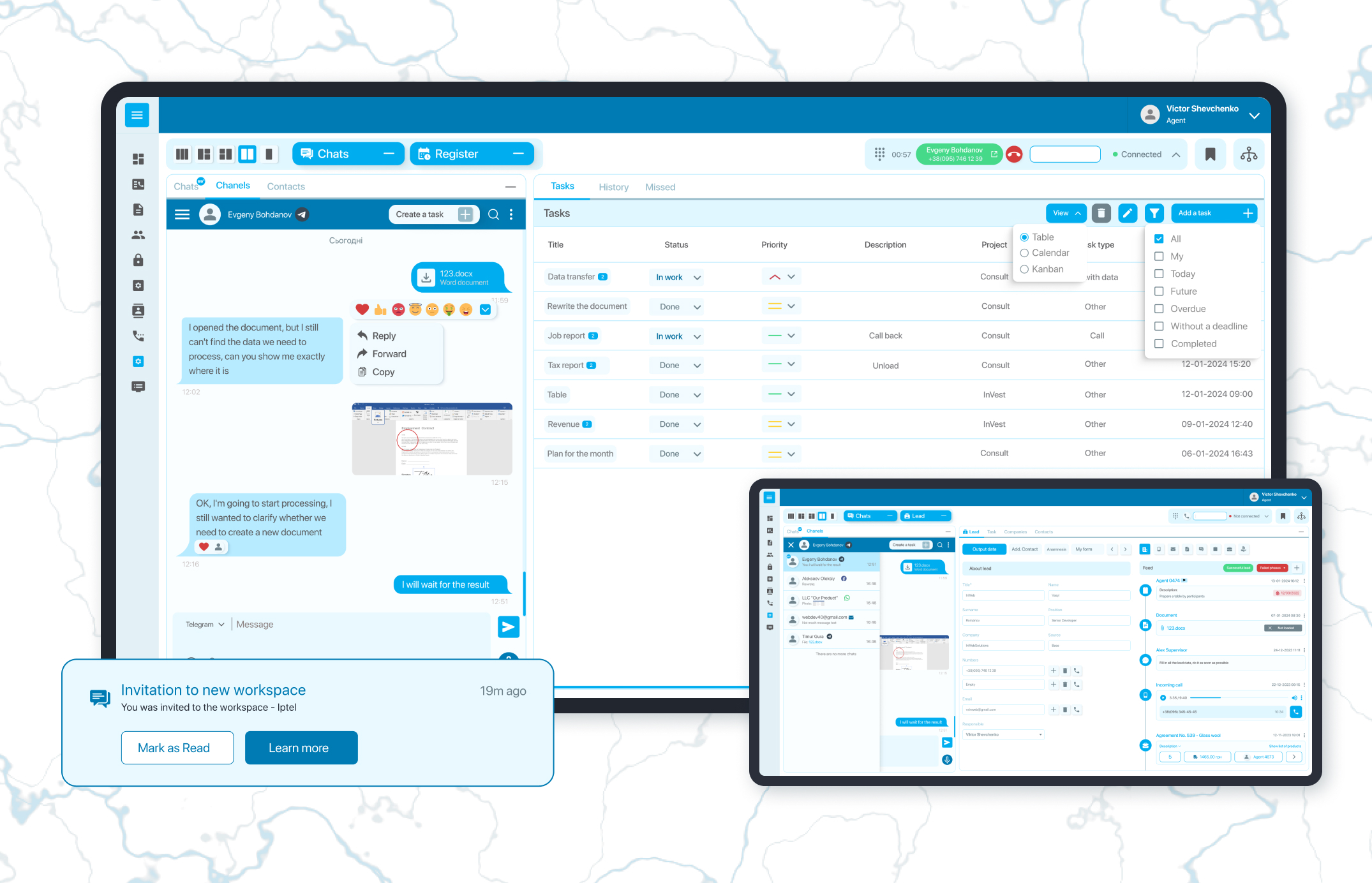
- Covers 60–80 screens across PBX settings, auto-dialer, workspaces, contact centre, CRM and forms
- Reflects plan-dependent interfaces, with different features and states for each subscription tier
- Handles data-heavy layouts such as tables, logs, dashboards, feeds, calendars and settings panels
- Is structured as reusable components that are easy to integrate into Front-End Framework
- Stays pixel-accurate to the design and consistent across the whole product
Solution (what we do)
We worked as the dedicated layout team alongside IPTel’s front-end developers. Our job was to turn every approved design into clean, component-based HTML and CSS, while the client’s team integrated the markup into the Front-End Framework and connected it to the platform’s logic.
- Laying out PBX administration screens: IVR, call scripts, time conditions, queues, trunks, internal numbers, blacklists, audio files and music on hold.
- Building auto-dialer screens: campaign list, step-by-step setup, robot and agent assignment and campaign dashboard.
- Implementing admin dashboards, call logs, phonebook, user groups, agent and user workplaces with call notifications and history.
- Laying out the CRM: event feed, deals, contacts, tasks, documents, calendar, filters and reports, plus the form creator and automation settings.
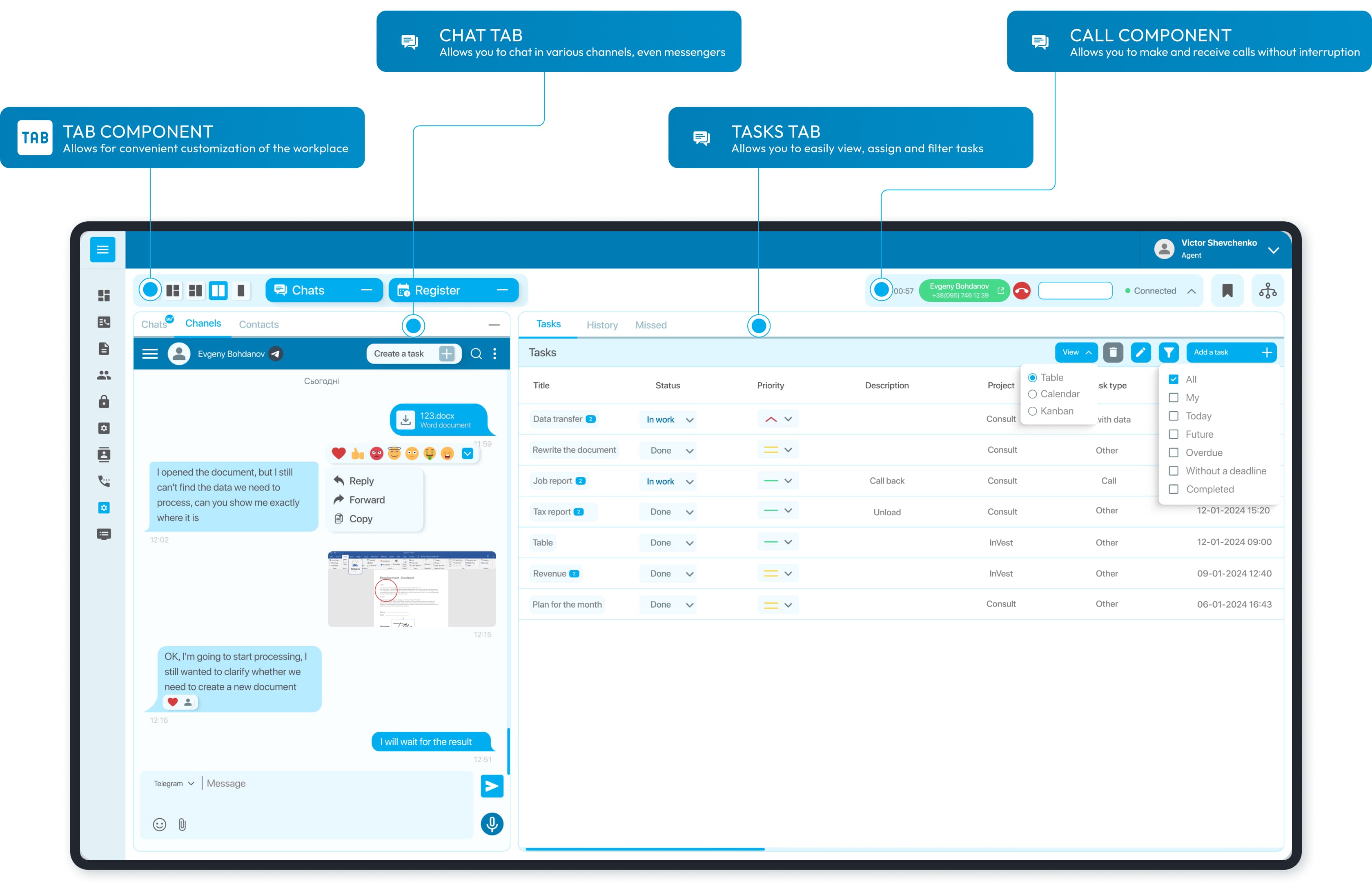
- Creating a shared library of components and states (tables, filters, forms, popups, dropdowns, tabs, calendars, status indicators) and plan-specific screen variations that the Front-End Framework team could reuse across modules.
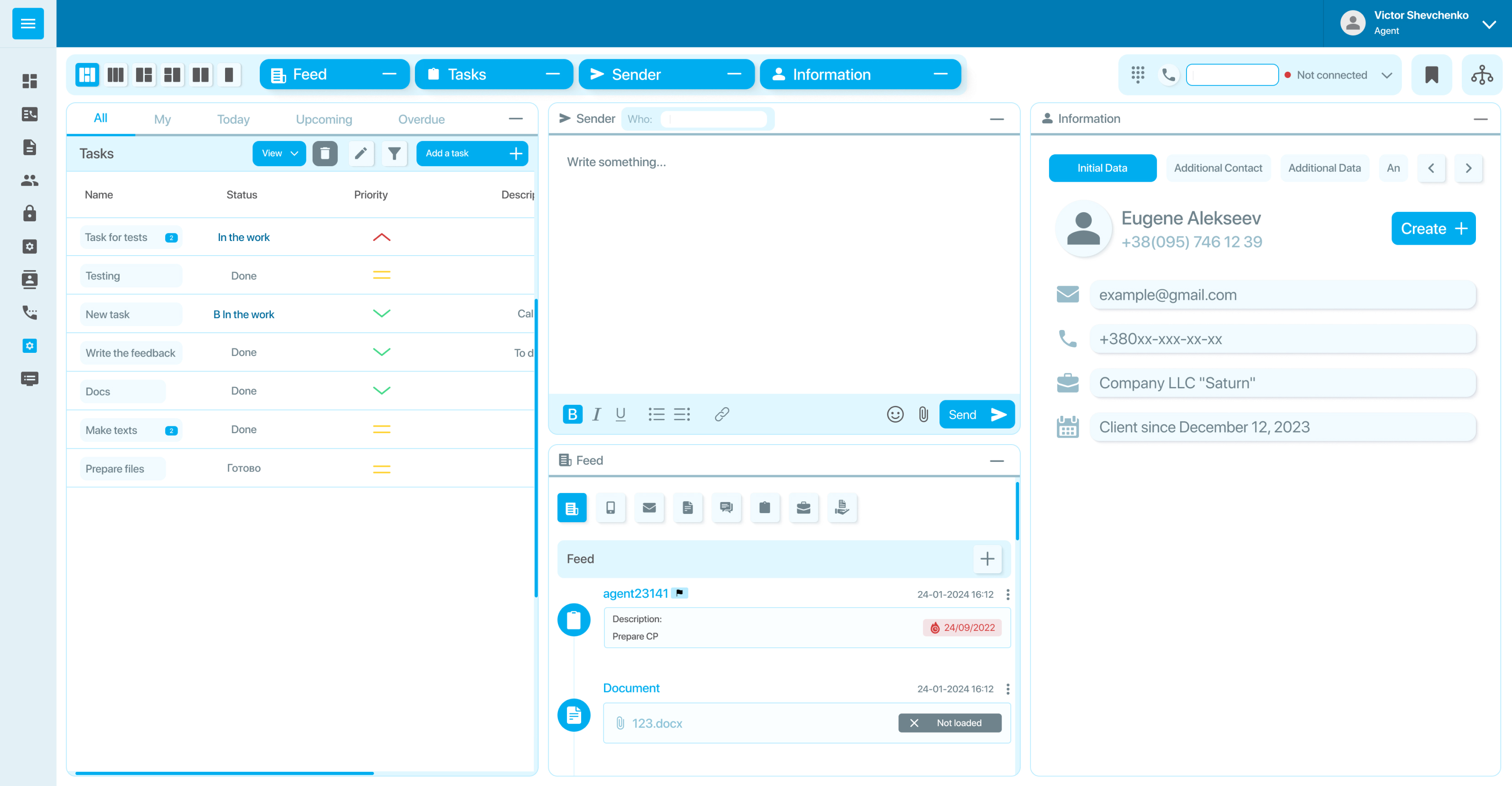
Since the release, the Galaxy IT Inc. team has been responsible for the technical support of the platform. A separate team of developers and designers are assigned to the project to implement the client's plans for further online business development.
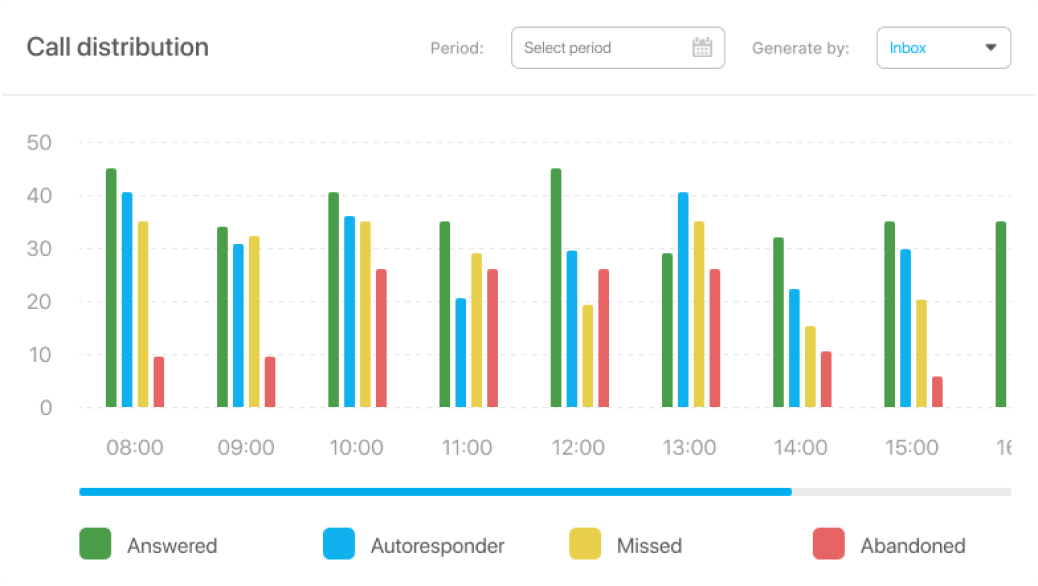
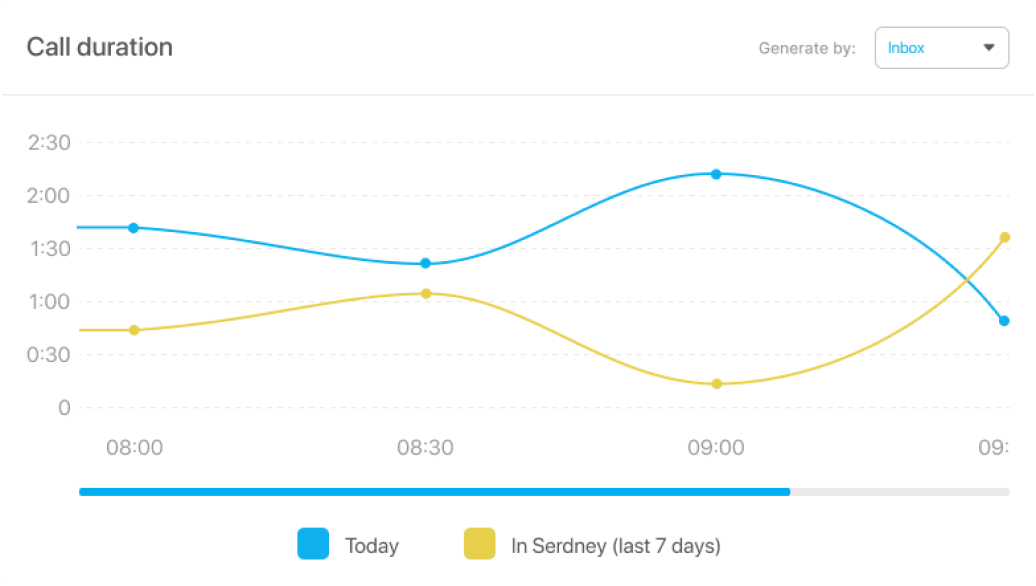
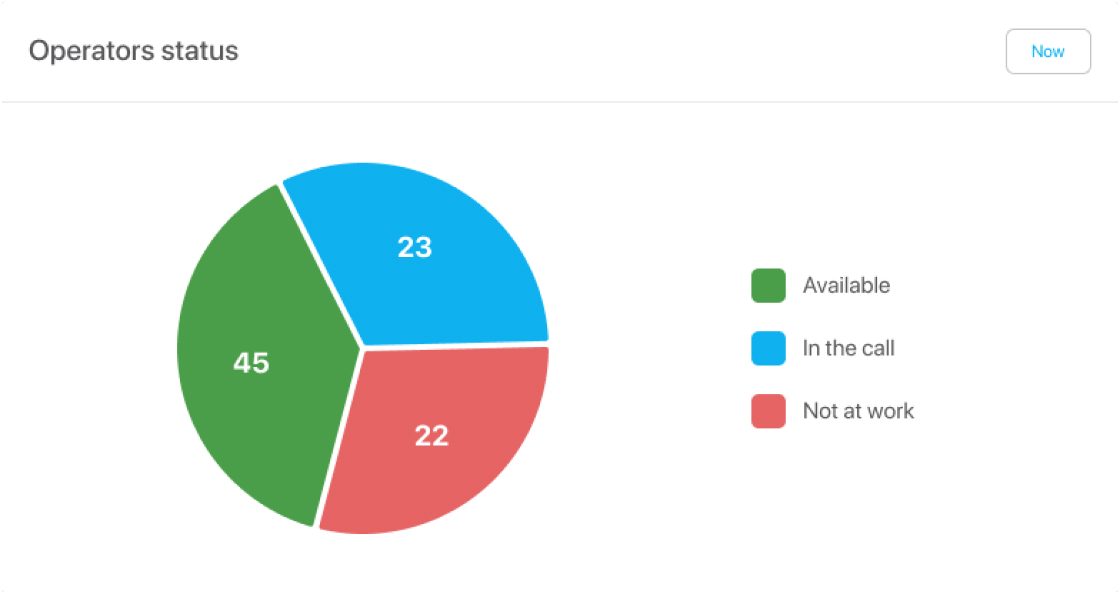
Impact / Result
IPTel’s developers received a complete, consistent layout of the entire platform that they could plug into Front-End Framework without rebuilding the UI. The shared component approach kept dozens of screens visually identical in quality and made new modules faster to implement.
Dividing the work let each team focus on its strengths: we delivered the markup for every screen and state, and the client’s front-end team handled to Framework integration and logic. Thanks to this setup, a large, plan-dependent SaaS interface moved from design to implementation steadily and without layout rework.